Resources
Search below for resources covering the intersection of climate engagement, social science and data analytics.
RESULTS
The Senses Toolkit
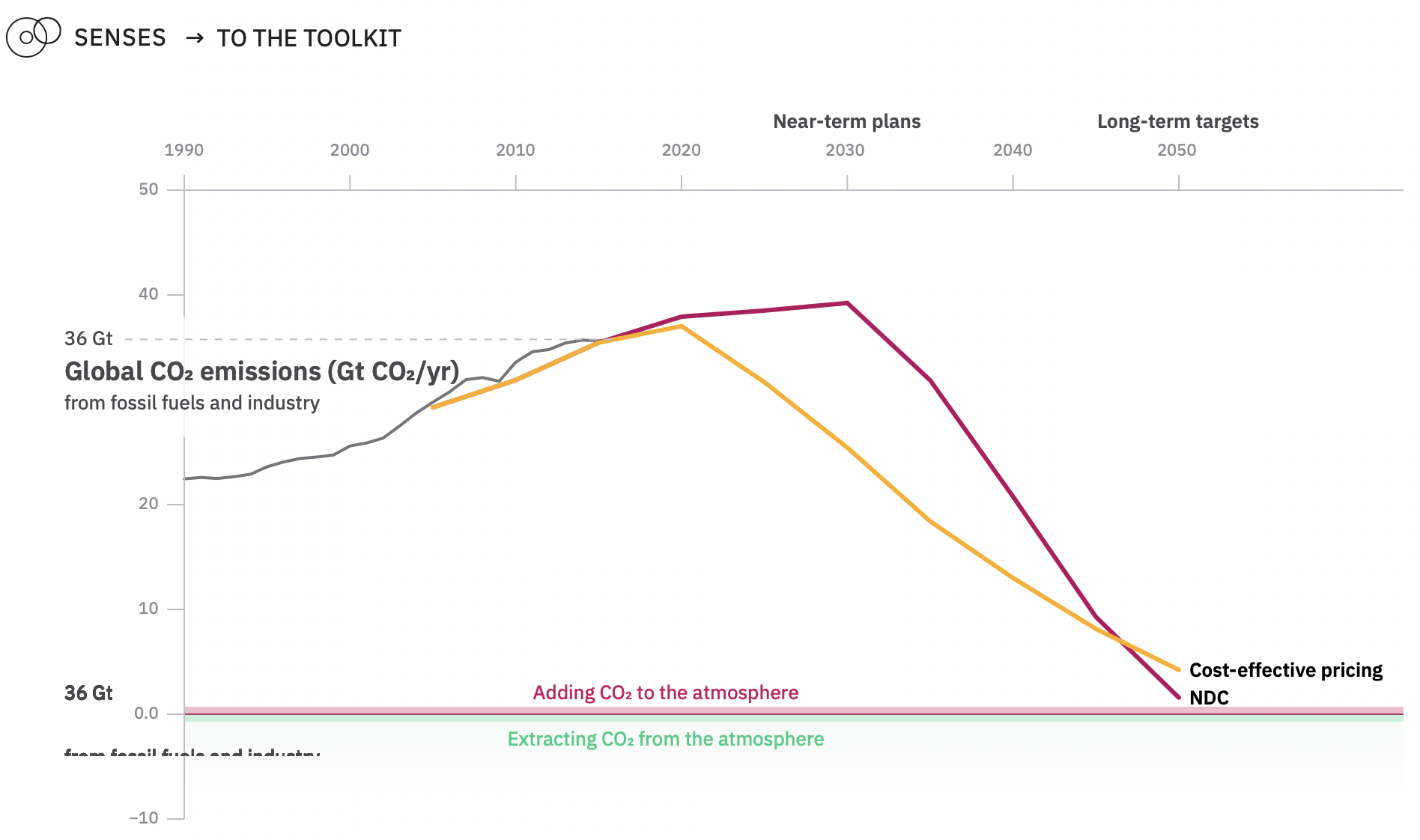
The SENSES Toolkit is a collection of visualization tools that explore a variety of climate change and clean energy scenarios scenarios including:
- Closing the Emissions Gap: How current, global decarbonization plans match up with the long-term targets of the Paris Climate Agreement
- The Role of Land for Food Production and Climate Protection: How current land-use practices accelerate climate change
- Net-zero Pathways for Industrialized Countries: Simulations that outline possible pathways to net-zero emissions by 2050 for the US, EU, Japan, and Australia
In addition to the scenarios, the toolkit includes practical guidelines of how to use climate change scenarios for three key user groups: policymakers, the financial sector, and regional audiences.
Resilience Before Disaster: The Need to Build Equitable, Community-Driven Social Infrastructure
California and the US are increasingly beset by climate-fueled disasters like wildfires, extreme heat, and power blackouts. These events put additional stress on frayed hard and social infrastructure systems, and disproportionately impact working-class communities of color. To adapt to these changes, society must update our notion of disaster response to increase resilience in these systems before disasters strike. This report offers two models for this response: 1) building and normalizing resilience hubs where community members gather and organize both in good times and bad, and 2) increasing in-home resilience by recognizing homecare workers as effective agents for assisting vulnerable populations and bridging authorities and the frontlines. The report goes on to recommend specific ways to set up resilience hubs, train care workers, and develop forward-thinking emergency response plans to avert human disasters after natural disasters.
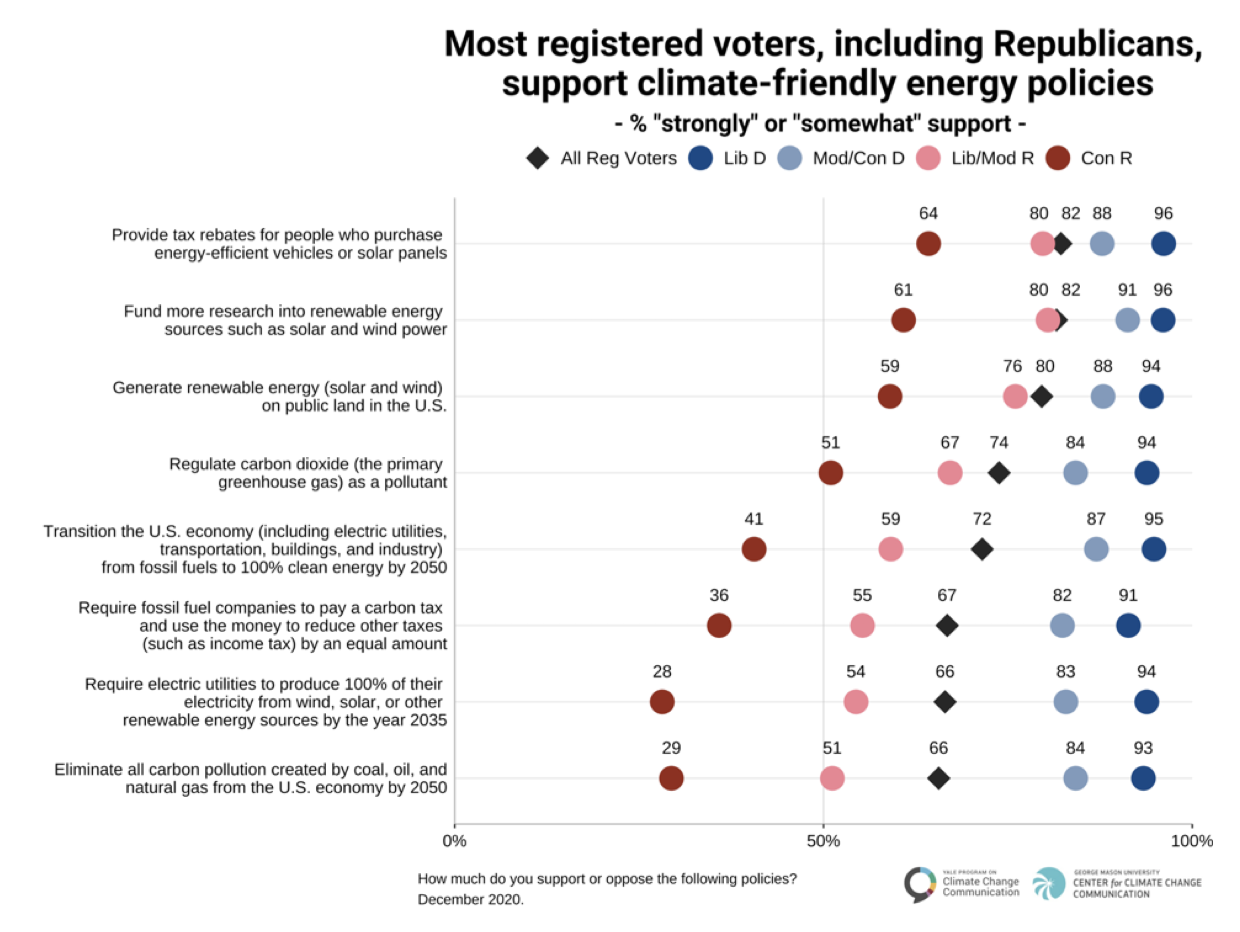
Poll: Most Voters Support Ambitious Climate Action
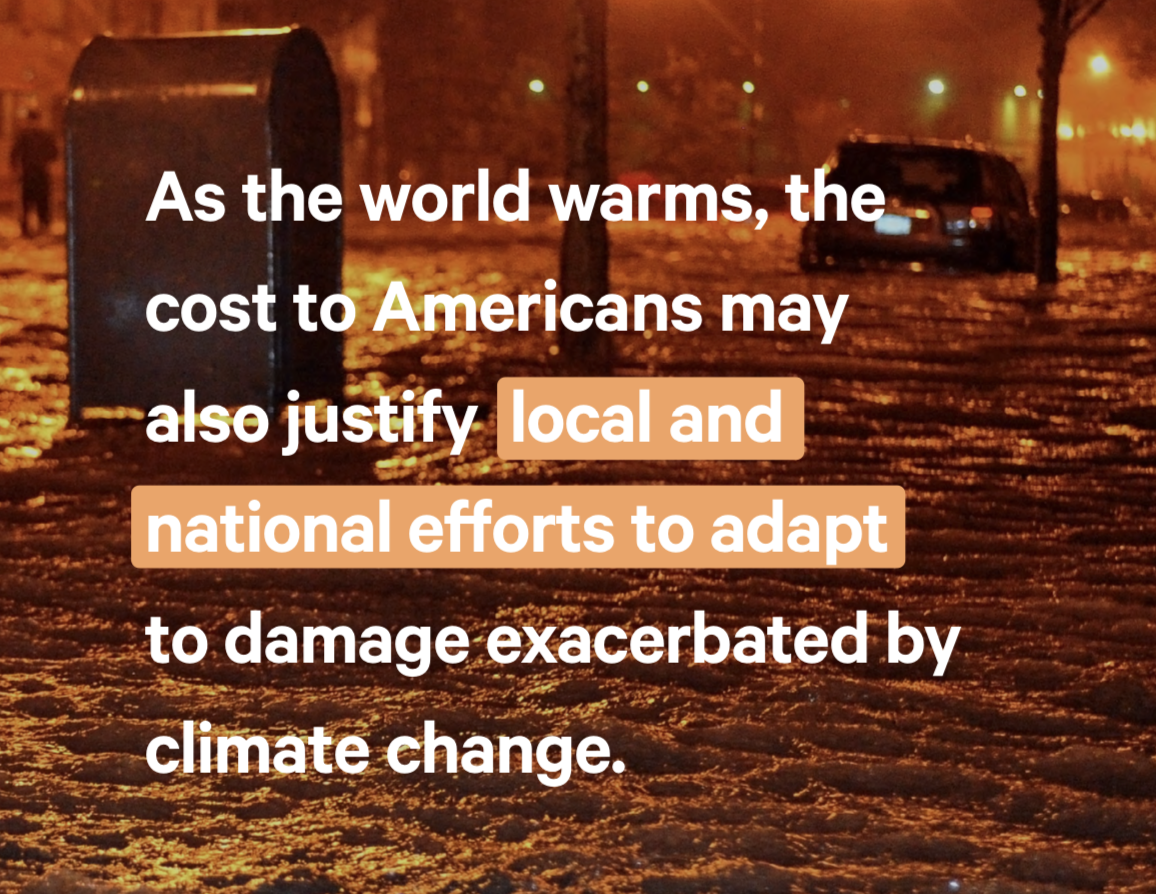
Amid Brutal Natural Disaster Season, Nearly 3 in 4 Adults Say Climate Change Is Playing a Role
Nationally representative polling from Sept. 14-16 shows that 39% of US adults say that climate change has contributed “a lot” to recent natural disasters like hurricanes and wildfires, with a further 34% saying climate change was responsible for “some.” Black and Hispanic adults were the most likely to say “a lot” (49% each), with White respondents at 36%.
Other highlights:
- Roughly half (48 percent) of U.S. adults are “very concerned” about the impact of climate change on the U.S. environment.
- 4% of adults say they are considering moving now due to natural disaster concerns, and 16% say they would consider a move in the future.
- 39% if adults say they are “very concerned” about the impact of climate change on the U.S. economy.
- The percentage of adults who say they are “not concerned at all” about climate change fell to 8% in this survey.
Poll: Americans Back Tough Limits on Building in Fire and Flood Zones
A recent poll looking at American attitudes towards new regulations on development in the wake of record numbers of wildfires and hurricanes show broad support for policies to increase resilience and help protect communities from floods and fires. In addition, 75% of Americans say they have personally felt the affects of climate change 75% of Americans say they have personally observed effects of climate change
- A majority of Americans support policies to increase resilience to and help protect communities from wildfires including: prohibiting development near fire-prone areas (58%), requiring people to purchase fire insurance (60%), removing dead vegetation in forests (76%), helping Americans who lose their homes due to fires (79%), increasing the number of firefighters (85%), and requiring use of fireresistant building materials (87%).
- A majority of Americans similarly support policies that increase resilience to and help protect communities from floods, including: prohibiting development in flood-prone areas (57%), paying people to move to live in safer places (59%), requiring flood insurance (66%), helping Americans who lose homes due to floods (77%), requiring new building codes to minimize flood damage (84%), and doing construction to encourage quicker water drainage (87%).
Resilient Clean Energy for California
This report documents the widespread impacts of power shutoffs in California and the drawbacks of conventional solutions. Vote Solar documents the risks of relying on dirty BUGs, including deaths from carbon monoxide poisoning, hazardous air pollution, and, ironically, fire hazards.
Webinar: Our Power Puerto Rico: A campaign case study & framework for "Just Recovery"
As communities and advocates worldwide work to respond adequately to increasing climate disasters, where can climate advocates find resources to advance just, equitable, and community-based disaster recovery?
In this webinar, Climate Advocacy Lab teamed up with Climate Justice Alliance (CJA) to discuss CJA's recently released multimedia report Our Power Puerto Rico: Moving Toward a Just Recovery (a project completed with support from the Lab!). During the conversation, authors, experts, and frontline organizers who contributed to the case study and report highlight tools (including the 'Just Recovery framework'), practices, and experiential lessons learned from applying a participatory model of "Just Recovery" to disaster response in Puerto Rico following hurricane María.
Webinar: Centering Equity in Climate Adaptation and Resilience –– with Asian Pacific Environmental Network and The Greenlining Institute
This conversation highlights findings from two reports focused on how the climate advocacy community can support equitable climate resilience (the ability of communities to adapt and thrive in the face of impacts from climate change) in climate policies and programs, as advocates nationwide are pushed to think beyond a frame of "simply" climate mitigation: Making Equity Real in Climate Adaptation and Community Resilience Policies and Programs: A Guidebook and Mapping Resilience: A Blueprint for Thriving in the Face of Climate Disasters.
Poll: Green New Deal for Public Housing Can Stand Up to Scrutiny
This polling tests Green New Deal (GND) for Public Housing Act legislation in an electoral environment, with Republican arguments against it. Polling includes questions probing the support of voters for a policy "if it would...":
Our Power Puerto Rico: Moving Toward a Just Recovery
This multimedia report provides a comprehensive case study of Climate Justice Alliance (CJA)’s Our Power Puerto Rico (OurPowerPR) campaign as a model of Just Recovery, an effective and innovative tool for climate adaptation that integrates many sectors of the economy to include energy democracy, food sovereignty, rural infrastructure and community self-determination.