Resources
Search below for resources covering the intersection of climate engagement, social science and data analytics.
RESULTS
Climate Opinion Factsheets (2024)
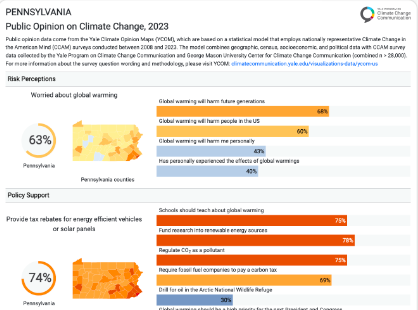
Americans' opinions about climate change vary widely depending on where people live. Yale Program on Climate Communication just released a US Climate Opinion Factsheet Map tool. The factsheets include 22 key measures of public climate change knowledge, attitudes, policy support, and behavior for each of the 50 states, 271 congressional districts, and 3,142 counties across the U.S. The Factsheets make this state and local information even easier to use and share.
Environmental Polling Roundup - May 3rd, 2024
This post includes climate and environment headlines, data points, and key takeaways from recent public polls - including new polling on polluter accountability, Big Oil misinformation, climate resilience, and the Inflation Reduction Act.
HEADLINES
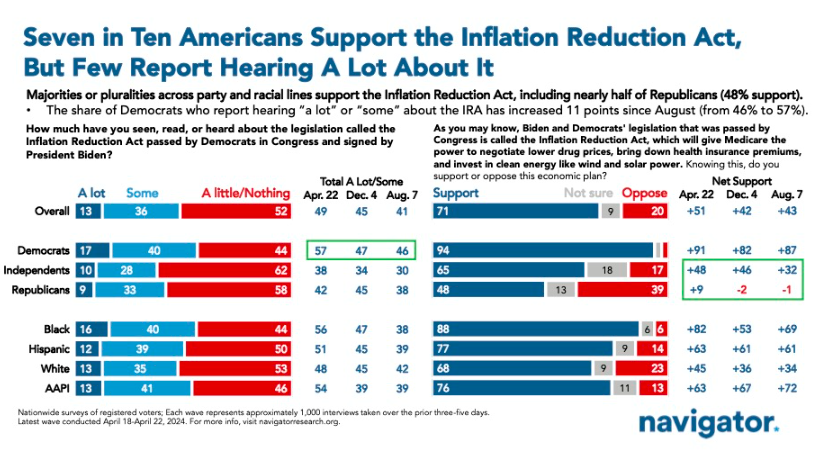
A growing share of Americans support the Inflation Reduction Act – including nearly half of Republicans – but only about half of Americans report hearing about it. Large majorities support a range of recent health care policies, including capping the cost of insulin, providing free vaccines, giving Medicare the power to negotiate lower drug prices, and cracking down on hidden junk fees on prescription drugs. Fewer than a third of Americans report hearing “a lot” about each of the health care policies tested.
Poll: More Than Seven in Ten Americans Support the Inflation Reduction Act
Seven in ten voters support the Inflation Reduction Act when they learn basic information about it, but half say that they’ve heard little or nothing about it. Voters support the Inflation Reduction Act by a 71%-20% margin after reading a brief description of it. This is largely driven by sky-high support among Democrats (94% support), while Navigator finds that independents are also supporting the IRA by an increasingly wide margin (65% support / 17% oppose).
Poll: Majority of Americans are Experiencing Climate Change in Their Lives
Most Americans say that climate change is happening now, and majorities across party lines support investments in “climate resilience” after learning about the concept. 71% of Americans support actions to increase climate resilience after seeing a brief description of the term. 60% of Americans agree that the impacts of climate change “are being experienced now”. Investments in climate resilience are popular across partisan lines, with large margins of support among Democrats (84%-6%), independents (66%-11%), and Republicans (65%-22%).

Poll: This Earth Month, Voters Want to Hold the Biggest Emitters Most Responsible for Climate Damages
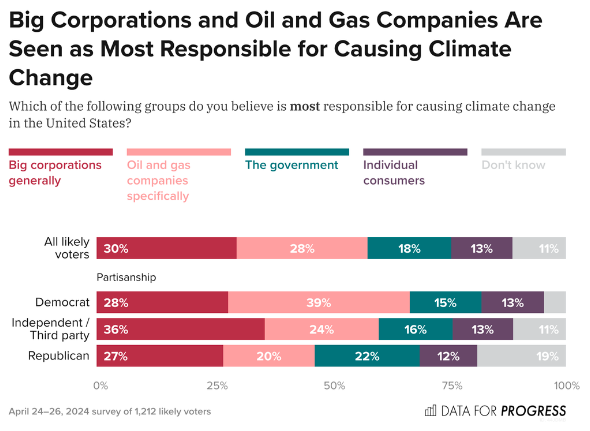
Voters widely agree that corporate polluters should be held accountable, and two-thirds support a “climate superfund” bill. Voters are especially angered to hear that the industry knew about its pollution decades ago and still lied to the public about it. 81% of voters agree that entities with the largest emissions should be most responsible for reducing their carbon footprint and climate impact. 72% of voters are angry to hear that oil companies “discovered that their products were polluting the environment decades ago and have lied to the public since to protect their bottom line”.
Environmental Polling Roundup - April 26th, 2024
This post includes climate and environment headlines, data points, and key takeaways from recent public polls - including new polling on climate action, the Biden administration’s climate and environmental record, extreme weather, and Americans’ top environmental priorities.
HEADLINES
Voters recognize plastic pollution as a major problem and an overwhelming, bipartisan majority support the U.S. joining a Global Plastics Treaty. Most voters rate plastic pollution as a “crisis” or “major problem” both globally (79%) and in the United States (70%). When it comes to measures to “reduce the production of plastics” specifically, 87% say that they support this type of action – including large majorities of Democrats (94%), independents (80%), and Republicans (80%). Voters across party lines support the U.S. joining a Global Plastics Treaty.
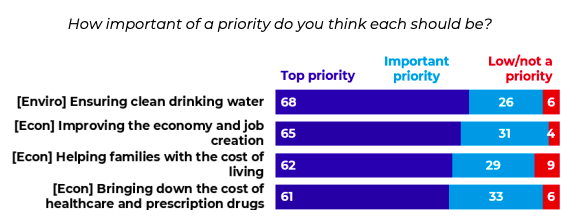
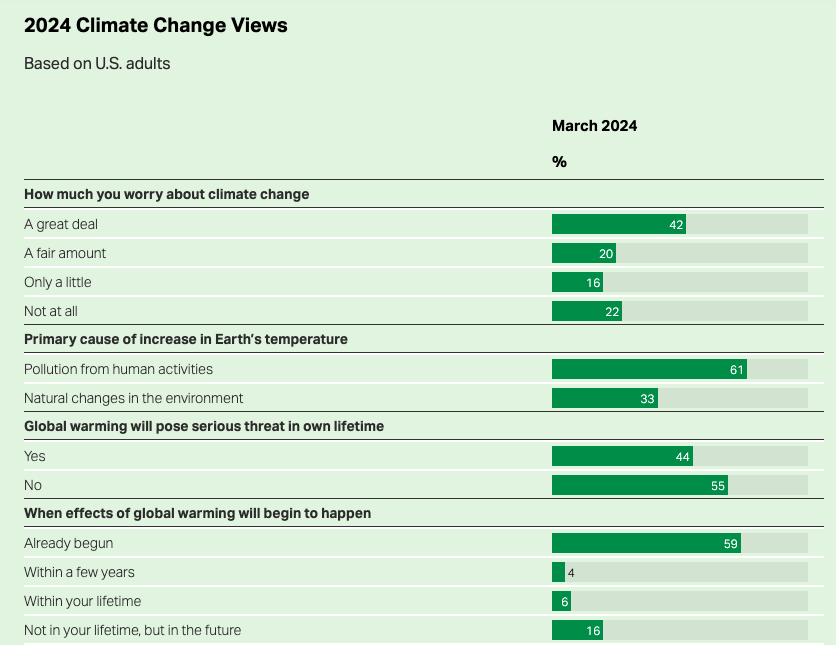
Pollution of drinking water remains Americans’ top environmental concern, and few ever say that the government is doing “too much” to protect the environment. 62% of Americans say that they worry at least “a fair amount” about climate change, including 42% who worry “a great deal” about it. 61% of Americans recognize that pollution from human activities is the primary cause of increases in the Earth’s temperature over the past century. 59% of Americans recognize that the effects of global warming have already begun. Only 19% of Americans say that the U.S.
Steady majorities of Americans say that the government should do more to address global warming and will be failing the American people if it doesn’t take action. However, Americans have mixed attitudes about the economics of climate action. 56% of Americans agree that the U.S. should do more in the fight against climate change. 54% of Americans agree that the U.S. government will be failing its people if it does not act now to combat climate change.