Resources
Search below for resources covering the intersection of climate engagement, social science and data analytics.
RESULTS
Community Ownership of Solar with Cleveland Owns
In Cleveland, OH, the nonprofit Cleveland Owns is incubating the state's first community-owned solar developer, Cleveland Solar Cooperative, which was the subject of a recent case study funded by the Climate Advocacy Lab.
On the call, organizers shared lessons learned, their motivations to keep at this work, and best practices for groups around the country working to build community-owned solar arrays. The insights shared in this webinar will inform advocates working to start community-owned solar projects, provide practical tips for groups building relationships with the goal of taking action for climate justice, and introduce attendees to a national network of organizations that support projects like this around the country.
Poll: A Majority of Voters Believe Climate Change Will Increase Costs
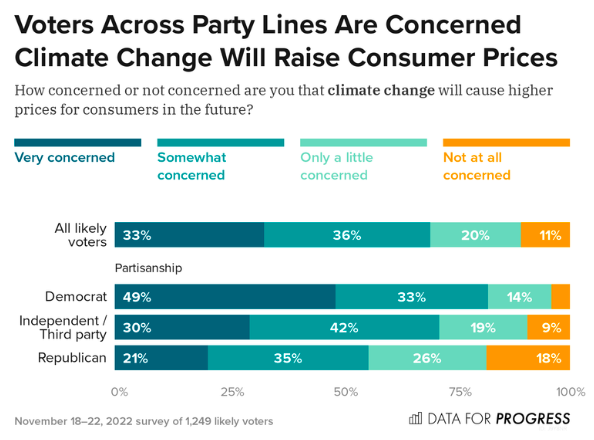
Voters are worried that climate change will increase the cost of living, but have hope that the expansion of renewables will bring down energy costs. 69% of all likely voters believe that climate change effects will increase costs for consumers. 70% of Americans believe that expanding renewable energy production, like wind and solar power, will bring energy costs down (including 88% of Democrats and 53% of Republicans).
Poll: Nonmetropolitan Nebraskans’ Opinions about Water, Climate, and Energy
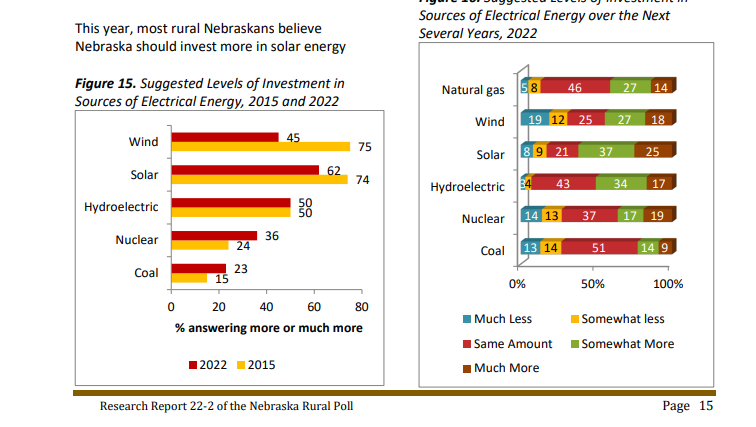
Analysis of the Nebraska Rural poll revealed interesting insights about climate, energy, and water issues:
A Case Study on the Founding of the Cleveland Solar Cooperative
In June 2019, the nonprofit Cleveland Owns convened The Lakewood Community Solar Fellowship, a free leadership development program focused on bringing resident-owned community solar to Lakewood, Ohio. A group of 7 residents took part, meeting for a few hours every Sunday in the basement of the local public library. The goal? Form a solar cooperative to fight climate change and build toward climate justice.
When the Fellowship started, most of these residents were strangers, but together they would go on to form the Cleveland Solar Cooperative (CSC), Ohio’s first community-owned cooperative solar developer. How did this happen?
This case study details how Cleveland Owns helped convene the Cleveland Solar Cooperative (CSC), Ohio's first community-owned cooperative solar developer. It explores how Cleveland Owns developed the foundation for energy democracy efforts in their city; the key moments, challenges, and successes they and allies faced as they formed the cooperative; and an offering of tools and resources for other communities seeking to replicate their model.
Among these resources and insights are:
- An account of Cleveland Owns' organizing principles and group norms
- An honest reflection of challenges they faced, such as developing mutual trust and the technical expertise necessary to navigate the local energy market
- The rationale behind the cooperative business model underlying the CSC
- The CSC's process of developing bylaws, governance structures, and technical infrastructure for themselves
- Their ethos of self-assessment that drives their evolution as a collective
- A tool kit of organizing materials and resources on energy democracy and solar development
Home solar panel adoption continues to rise in the U.S.
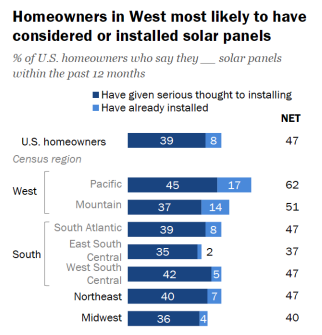
Residential solar has continued to grow rapidly in recent years, despite COVID-19-related supply chain issues, import restrictions and other obstacles. Residential solar power installations rose by 34% from 2.9 gigawatts in 2020 to 3.9 gigawatts in 2021. In the second quarter of 2022, residential solar set its 5th consecutive quarterly growth record. 8% of U.S. homeowners said they have already installed solar panels and an additional 39% have given serious thought to it in the past year. The share of homeowners who say they have installed solar panels is up from 6% in a 2019 survey and 4% in 2016. When asked about possible reasons for installing solar panels, almost all homeowners who have installed them or considered doing so (92%) see saving money on bills as a reason. Democrats and Republicans who have installed or considered installing home solar panels are about equally likely to say this. Most homeowners who said in January that they’ve installed or seriously considered installing solar panels at home said helping the environment was a motivation for doing so (81%). 59% said they did so because it would be better for their health and their family’s health. Another 64% cited solar investment tax credits as a reason. (That survey was conducted before the 30% federal tax credit became law in August 2022.)
Environmental Polling Roundup - September 9th, 2022
This post includes climate and environment headlines, data points, and key takeaways from recent public polls - including new polling on the Inflation Reduction Act, attitudes toward the country’s major domestic energy sources, and a new paper on the behaviors and perceptions that correlate the most strongly with changes in climate attitudes.
Poll: Support for Nuclear, Wind, and Solar Trending in 2022
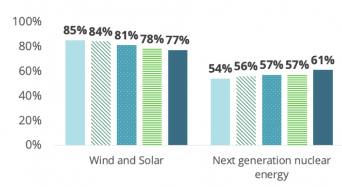
Wind and solar remain Americans’ most favored energy sources, while support for nuclear energy continues to trend steadily upward. Americans are far less likely to blame gas for pollution and climate change than other fossil fuels. 77% of Americans say the United States should be spending more money over the next few years on the research and development of wind and solar energy. 76% of Americans recognize that oil contributes to unhealthy air pollution and climate change. 73% of Americans recognize that coal contributes to unhealthy air pollution and climate change.
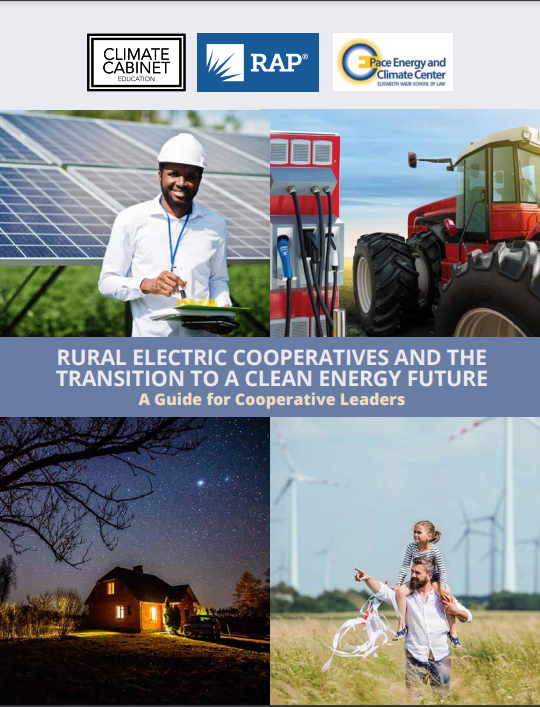
A Guide for Cooperative Leaders: Rural Electric Cooperatives and the Transition to a Clean Energy Future
Rural electric cooperatives are foundational institutions within their communities. Cooperatives serve as energy providers and a cornerstone of economic development and community well-being. Today, the electric utility industry — including rural cooperatives — is undergoing a transformation that is on par with some of the biggest industrial transformations in history, and cooperative directors are on the forefront of that transition. This paper is designed to provide a guide for electric cooperative directors seeking to make responsible, forward-looking planning decisions and investments within a clean energy transition – while delivering more flexible, resilient, and economic service to member-owners. Rural electric cooperatives ground their work in the seven cooperative principles: Open and voluntary membership; Democratic member control; Members’ economic participation; Autonomy and independence; Education, training and information; Cooperation among cooperatives; Concern for community.
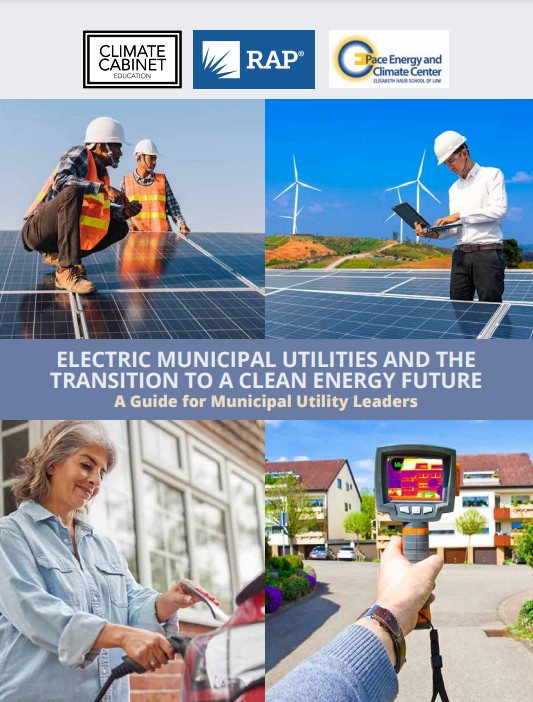
A Guide for Municipal Utility Leaders: Electric Municipal Utilities & the Transition to a Clean Energy Future
Transitioning to clean energy can create a more flexible, economic, and resilient electricity system. Small and mid-sized cities can enjoy safer, cleaner, more reliable, and more affordable service. Municipal utility leaders face unique challenges and opportunities when it comes to making the most of this transition. This resource is designed to provide a guide for municipal utilities seeking to make responsible, forward-looking planning decisions and investments within a clean energy transition while meeting their bedrock obligations to ensure reliable service in an economic manner. Benefits to consumers can include lower utility bills, healthier homes, and reduced energy burdens, especially for low-income residents. Benefits to communities can include local jobs, cleaner air and water, healthier communities, and climate change mitigation and resilience. Benefits to utilities can include cost savings, lower financial risk, reduced policy risk, energy security, resilience to weather disasters, and protection from fuel supply shortages.
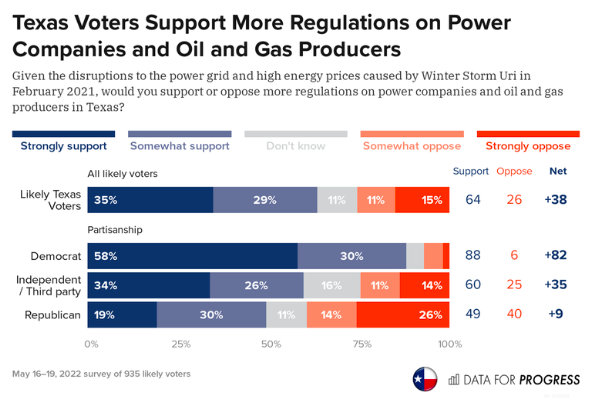
Texas voters view the clean energy transition as a net positive for the state economy, and most want to see their state leadership strengthen regulations on utilities and fossil fuel companies. 65% of Texans agree that state leaders such as Governor Greg Abbott and Attorney General Ken Paxton didn’t do enough to protect consumers with high energy bills following Winter Storm Uri, and two-thirds (67%) believe that the federal government should investigate possible price gouging by power companies during the storm. Additionally, only 35% believe that the Texas state government is doing enough to prepare the state for the impacts of climate change. The clear majority (64%) support more regulations on power companies and oil and gas producers “given the disruptions to the power grid and high energy prices caused by Winter Storm Uri in February 2021.” And by a 56%-34% margin, Texans side more with an argument that “regulations on energy companies need to be stronger in Texas to ensure power stays on and to protect Texas consumers from high prices” than a competing argument that “regulations on energy companies are an overstep of the government, don’t usually deliver the benefits they promise, and are not worth the cost.” Importantly, the poll also finds that more Texans believe that the clean energy transition will improve Texas’s economy (47%) than worsen it (35%).