Resources
Search below for resources covering the intersection of climate engagement, social science and data analytics.
RESULTS
Environmental Polling Roundup - March 22nd, 2024
This post includes climate and environment headlines, data points, and key takeaways from recent public polls - including newly released polling on the Sackett v. EPA decision and clean water protections, new polling on oil and gas accountability, and a new analysis on the gap between Americans’ interest in climate activism and their actual behaviors.
HEADLINES
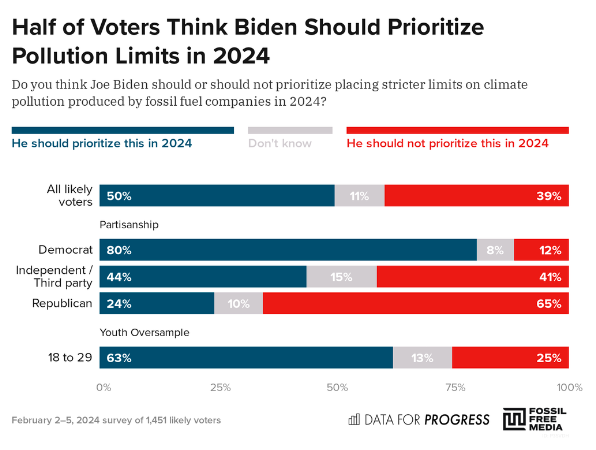
Poll: Voters Support Holding Oil and Gas Companies Accountable and Want to See Stricter Pollution Limits
Voters distrust fossil fuel companies and the politicians that they fund, and want to see fossil fuel companies held accountable for their pollution. 84% of voters are concerned about oil and gas companies making large profits while consumers face rising energy bills. 78% of voters agree that “oil and gas companies that knew about the polluting impact of burning fossil fuels, but that intentionally misled the public about it, should be held accountable”.
Poll: Voters Strongly Support Key Policies That Would Deter Oil and Gas Companies From Illegally Polluting
Voters overwhelmingly want stronger accountability for polluters, including compensation for damages to the environment and local communities. Most disapprove of the court decision to block an investigation of environmental injustices in Louisiana’s “Cancer Alley”.
Poll: Testing on Biden’s Pause of Methane Pollution-Causing Development
In communications about President Biden’s pause on liquefied natural gas (LNG) export projects, voters are most swayed by messaging about health. The most effective and convincing way to talk about this pause is in the context of the pollution risk methane gas facilities pose and the health consequences from them. While other frames are still useful, the pollution-focused message was chosen overall and by virtually all subgroups as the best message on the topic.
LCV Youth Climate Poll
Young Americans don’t believe the Biden administration has done enough to combat climate change or to hold oil and gas companies accountable. Young Americans particularly want to see the administration close outdated oil and gas pipelines. 64% of young Americans aged 18-34 support closing outdated oil and gas pipelines. 59% of young Americans aged 18-34 support preventing new oil drilling on federal lands and waters. 54% of young Americans aged 18-34 support halting the expansion of methane gas exports. President Biden is deeply underwater with young Americans aged 18-34. This group is twice as likely to say that Biden is doing a “poor” or “not so good” job as president (65%) as to say that he is doing a “good” or “excellent” job (32%). Biden is even further underwater with this group on his ratings for combating climate change (24% excellent or good / 59% not so good or poor) and for holding oil and gas companies accountable (15% excellent or good / 61% not so good or poor).

Poll: Voters Support Limiting Natural Gas Exports
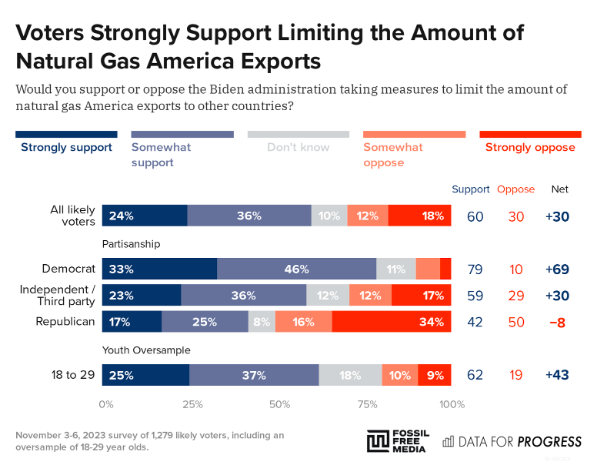
Voters want to limit gas exports and are amenable to several arguments against new exports, including arguments about costs, climate damage, pollution, and fossil fuel dependence. By a two-to-one margin (60% support / 30% oppose), voters support the Biden administration “taking measures to limit the amount of natural gas America exports to other countries.” Young voters, who vocally opposed the Biden administration’s actions in allowing the Willow project to move forward, support the Biden administration taking measures to limit gas exports by a greater than three-to-one margin (62% support / 19% oppose among young voters aged 18-29). By a greater than two-to-one margin (62% support / 28% oppose), voters support “pausing all natural gas export projects until the proper reviews are completed.” Roughly three-quarters of Democratic voters (76% support / 16% oppose) and just over half of Republican voters (52% support / 37% oppose) support a pause on new gas export projects, as do more than three in five young voters aged 18-29 (64% support / 21% oppose).
POLL: Voters Decisively Reject ‘Drill, Baby, Drill,’ Blame Oil & Gas Companies, OPEC+ for High Gas Prices
Polling identified several key lessons for communicators keeping big oil and gas accountable, such as: 1) Making "polluters pay" is a unifying narrative. Framing accountability in terms of the oil and gas industry’s enormous damages to communities and their health, coupled with their inflated profits, can help depoliticize this issue for a wide range of voters. 2) Focus the blame from global context to specific companies. Don’t let big oil and gas use geopolitics as a scapegoat.
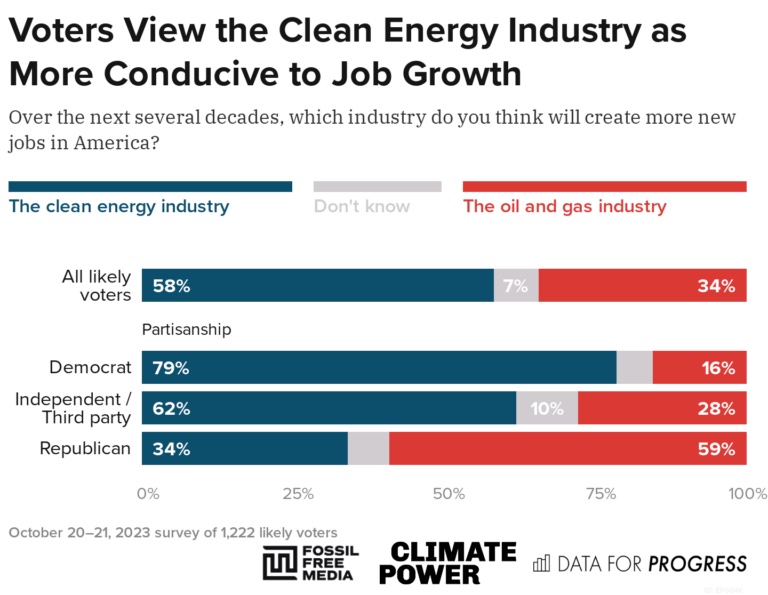
Voters in key states want stronger limits on methane emissions, and believe that implementing technology to limit methane pollution is more likely to create jobs than reduce them. By a 68%-26% margin, battleground state voters support stronger EPA limits on methane emissions from the oil and gas industry. By a 69%-27% margin, Pennsylvania voters support stronger EPA limits on methane emissions from the oil and gas industry. By a 66%-28% margin, Texas voters support stronger EPA limits on methane emissions from the oil and gas industry. By a 55%-41% margin, battleground state voters are more likely to agree that stronger methane pollution limits will create jobs than reduce jobs. By a 56%-42% margin, Pennsylvania voters are more likely to agree that stronger methane pollution limits will create jobs than reduce jobs. By a 58%-42% margin, Texas voters are more likely to agree that stronger methane pollution limits will create jobs than reduce jobs.

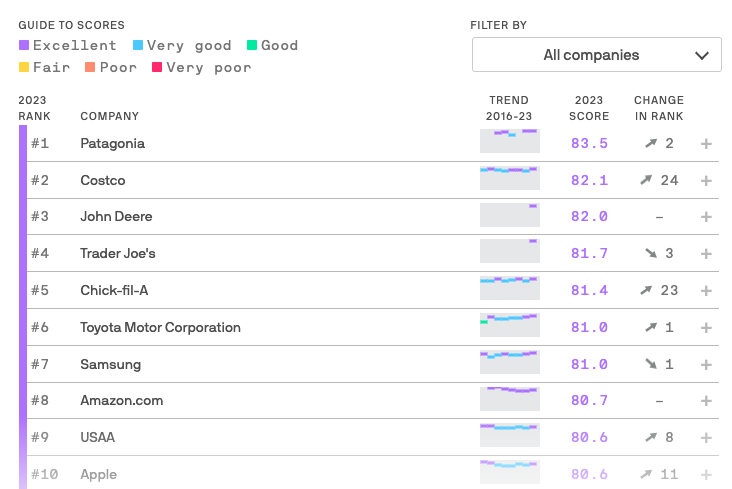
Patagonia tops the list of the country’s most respected brands. Fossil fuel companies - especially ExxonMobil and BP - fare poorly. Patagonia scored 83.5, an “excellent” score. Exxon was 82nd on the list, scoring 68.9, a “fair” score. BP was 92nd, scoring 63.5, a “poor” score.
Poll: Voters Do Not Want New Fossil Fuel Projects Prioritized on Public Lands
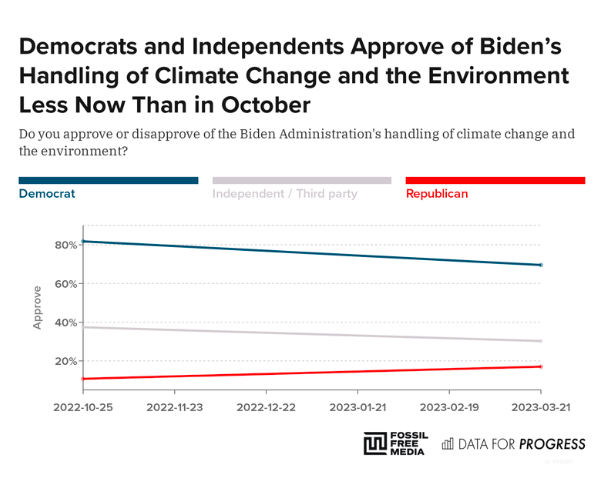
President Biden’s ratings on climate and the environment have slipped in recent months among Democrats and young voters. News about the Willow project drops his ratings among Democrats further, as voters - especially Democrats - don’t want to prioritize fossil fuel projects on public lands. By a 56%-35% margin, voters say that the federal government should prioritize clean energy projects over fossil fuel projects when allowing new energy projects on public lands. By an 80%-12% margin, voters support President Biden’s original campaign promise to take action against polluters who knowingly harm the environment or conceal information regarding health risks. By a 57%-32% margin, voters support President Biden’s original campaign promise to ensure a 100% clean energy power sector by no later than 2035.