Resources
Search below for resources covering the intersection of climate engagement, social science and data analytics.
RESULTS
Environmental Polling Roundup - April 5th, 2024
This post includes climate and environment headlines, data points, and key takeaways from recent public polls - including new polling on extreme weather, climate change, and plastic pollution.
HEADLINES
Experiencing Extreme Weather Predicts Support for Policies to Mitigate Effects of Climate Change
Americans who report experiences with extreme weather are more likely to support pro-climate policies. 62% of Americans support tax credits for families who install rooftop solar or battery storage in their homes. 62% of Americans support increasing investment in energy-efficient forms of public transportation. 60% of Americans support grants to communities to protect them from the impacts of climate change, including drought, heat, and extreme weather. 57% of Americans support forgivable loans for rural communities to improve their energy efficiency.
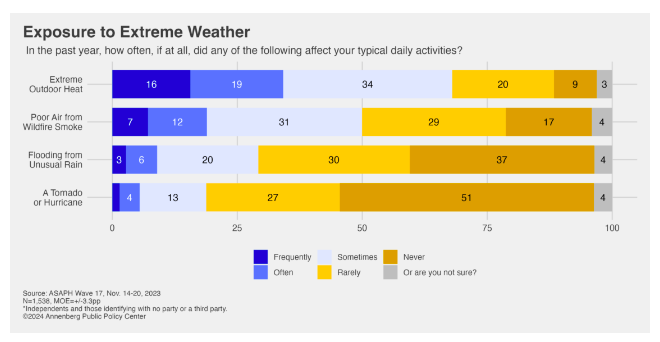
Poll: Strong support for the EPA implementing stricter limits on carbon emissions from heavy-duty vehicles
New US climate report says land theft and colonization amplify the climate crisis for Indigenous peoples
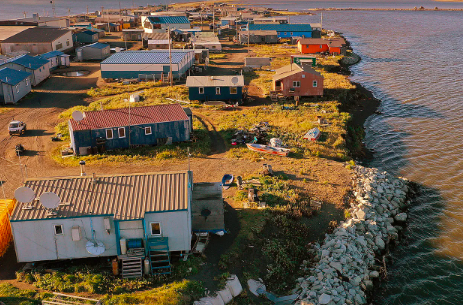
Indigenous self-determination is a key climate solution — if the federal government can get behind it. The latest National Climate Assessment cites a 2021 study that concluded that Indigenous peoples in the United States lost 99 percent of their territories through colonization, and that the lands that they were forced to move to face higher wildfire risk and worse drought than their traditional homelands. According to the authors, Indigenous peoples across the continental U.S. and its island holdings hail from more than 700 tribes and communities, and while each community has a different relationship with the federal government, all share similar experiences of colonization through stolen land, cultural assimilation, and persistent marginalization. The report also detailed problems with the National Flood Insurance Program, a federal insurance program managed by the Federal Emergency Management Agency that helps homeowners insure against the risk of flooding, something that many insurance companies won’t cover. The program is supposed to help communities mitigate flood risk, but the report found that its implementation in Native communities has been flawed and ineffective.
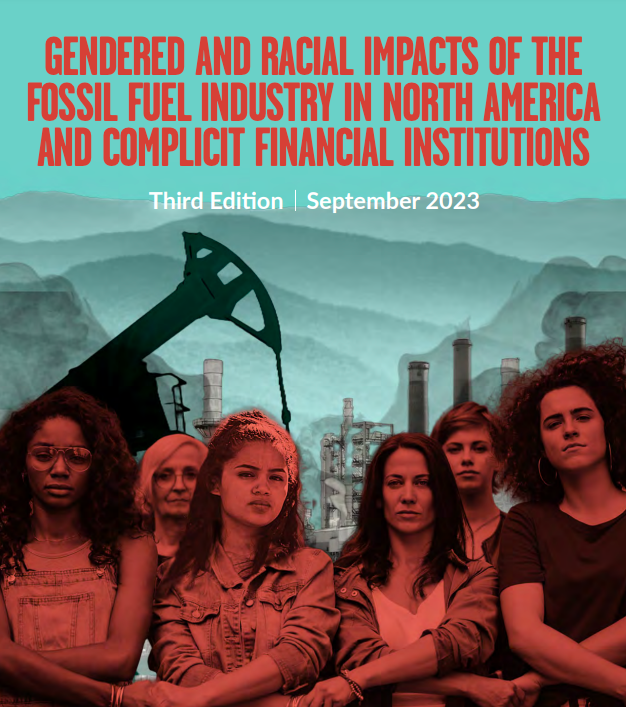
Gendered and Racial Impacts of the Fossil Fuel Industry in North America and Complicit Financial Institutions
This report finds an indisputable connection between the fossil fuel industry’s practices and negative impacts to African American/Black/ African Diaspora, Indigenous, Latina/Chicana, and low-income women’s health, safety, and human rights in the U.S. and parts of Canada. Specifically, fossil fuel-derived air, water, and soil pollution impact women’s fertility, mental health, and daily work and responsibilities. The negative effects from fossil fuel activity—including extraction, storage and transportation of coal, oil, and gas often in the form of liquefied natural gas (LNG)—stem from direct pollution of communities by fossil fuel companies’ contributions to industrial carbon dioxide and methane. The climate crisis does not and will not affect everyone equally, as factors such as gender, race, and socio-economic status make certain communities significantly more vulnerable to the increasing threats of climate change. Global inequalities, rooted in structural patriarchy, colonialism, white supremacy, and capitalism, continue to place people of the global majority, and specifically women, at risk.
Deep Canvassing Lessons Learned with Kentuckians for the Commonwealth
Join Kentuckians for the Commonwealth to learn more about their deep canvassing efforts, lessons learned, and best practices from their on-the-ground experience. During this webinar, participants will hear from the folks involved about how deep canvassing can be a powerful tool for bringing new people into the climate justice movement as well as how learnings might be applied to other climate deep canvass and relational conversation programs across the country.
Members of the It Takes Roots delegation discussed important achievements in UNFCCC history, such as the Kyoto Protocol and Paris Accord, with a special focus on Article 6 of the Paris Accord, which allows the biggest polluters to continue unabated by buying and selling “pollution credits” through carbon markets. They emphasized the importance of denouncing false solutions, preserving human rights and Indigenous rights, and understanding that a just transition moves us away from fossil fuels immediately. “When they’re talking about hydrogen, carbon capture, forest management and whatever… it’s not going to be in rich white neighborhoods, not in any place other than communities that are already overburdened and affected by the legacy of dirty energy,” said José Bravo, executive director of Just Transition Alliance.
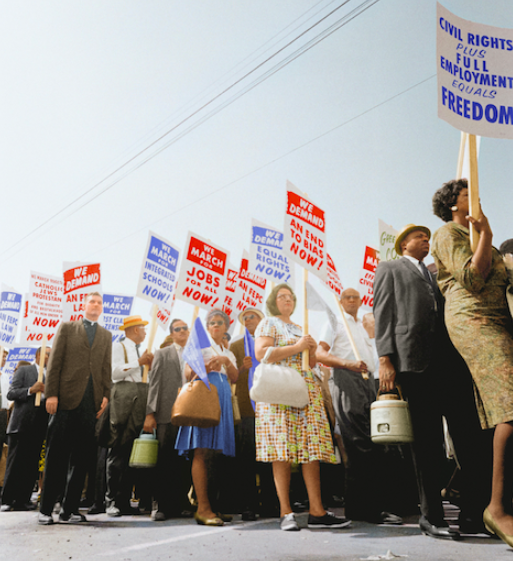
What the Climate Movement Can Learn from the Most Successful Civil Rights Organization
To realize a just transition, this article argues that we need more organizing projects that connect political goals and the economic self-determination of local communities. To do that, climate groups should learn from the Student Nonviolent Coordinating Committee (SNCC) of the 1960s.
Pushing for Energy Justice with Fairbanks Climate Action Coalition: Community Organizing Lessons from Alaska
The Fairbanks Climate Action Coalition (FCAC) is working to advance a Just Transition away from fossil fuel extraction and towards renewable energy and a regenerative economy in interior Alaska. For several years, FCAC’s Renewable Energy Working Group has been organizing around their local electric utility cooperative, Golden Valley Electric Association (GVEA), to support more generation from renewable energy sources and energy justice initiatives and decarbonization of electricity. FCAC’s organizing efforts have supported more pro-renewable candidates to be democratically elected to the GVEA’s Board of Directors and pushed the utility to consider community solar projects and on-bill financing. A major win came in June 2022 when the GVEA Board adopted a strategic generation plan including a commitment to close down one of their coal plants and pursue a large scale wind power project.
In this webinar, FCAC shares learnings from their Microgrant Report: Cooperative Opportunity: Clean Energy documenting the development of their campaign, sharing reflections on how their organizing structure led to wins, the challenges they faced, and the lessons that can be learned to succeed in future campaigns.
The Journey of Justice40
This episode, hosts talk to environmental justice (EJ) activists and federal policymakers about President Biden’s Justice40 Initiative, which directs 40% of the overall benefits of climate investments toward disadvantaged communities. This episode explores the decades of organizing that led to this moment, and what it will take now to fulfill the promise of the Justice40 Initiative. Special guest host Nikayla Jefferson is back for this episode! She speaks with former People United for Sustainable Housing (PUSH Buffalo) Executive Director Rahwa Ghirmatzion; Evergreen Action policy lead Rachel Patterson; and Shalanda Baker, Director of the Office of Economic Impact and Diversity at the U.S. Department of Energy (DOE), who leads the agency’s Justice40 implementation.