Resources
Search below for resources covering the intersection of climate engagement, social science and data analytics.
RESULTS
Pathways to Power Workshop
How are you measuring your organization’s efforts and advances towards meaningful long-term change? Would you like to begin the process of identifying a unique set of metrics that best suit your organizational goals and power-building strategies?
The Federal Funding Primer on Climate Justice
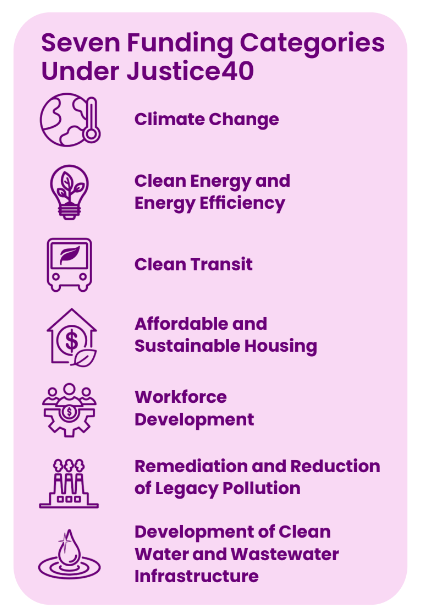
This Federal Funding Primer on Climate Justice provides an invaluable roadmap for navigating the maze of funding opportunities provided by Justice40, the Inflation Reduction Act (IRA), and Bipartisan Infrastructure Law (BIL). The Justice40 Initiative is a requirement of Executive Order 14008 and mandates that 40 percent of the benefits from environmental and climate justice related federal investments go to communities that are disadvantaged, underserved, or overburdened by pollution.
Environmental Polling Roundup - March 29th, 2024
This post includes climate and environment headlines, data points, and key takeaways from recent public polls - including new polling and research on the EPA's vehicle emissions rules, utilities, and people’s emotional responses to climate change.
HEADLINES
Poll: Voters Strongly Support Banning Utility Junk Fees and Using Ratepayer Funds for Political Activities
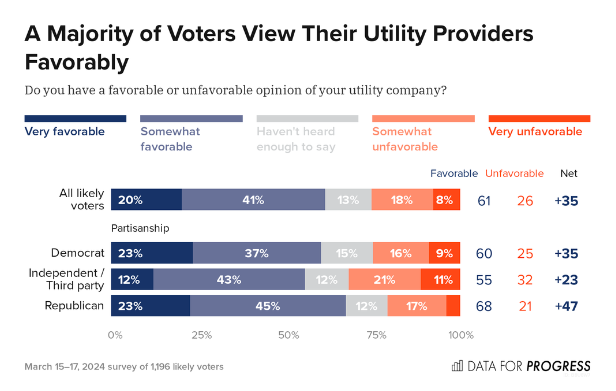
Voters mostly like their utility companies, but overwhelmingly oppose junk fees and utilities using customers’ money to fund lobbying and political activities. 72% of voters support legislation to prevent utility providers from using money collected from customers’ monthly bills to fund political activities. Support for this proposal is very balanced across party lines, with 74% of Democrats, 72% of independents, and 69% of Republicans in favor of legislation that would ban utility companies from using customers’ money on political activities.
Environmental Polling Roundup - March 22nd, 2024
This post includes climate and environment headlines, data points, and key takeaways from recent public polls - including newly released polling on the Sackett v. EPA decision and clean water protections, new polling on oil and gas accountability, and a new analysis on the gap between Americans’ interest in climate activism and their actual behaviors.
HEADLINES
The attitude-behavior gap on climate action: How can it be bridged?
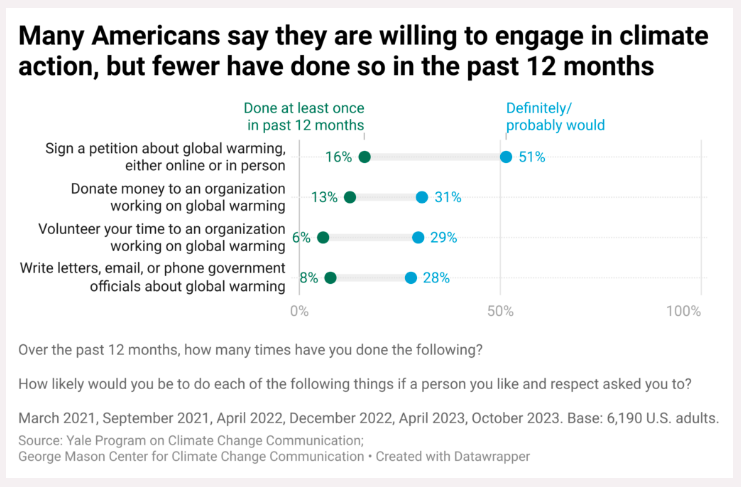
There is a large gap between people’s interest in climate activism and their self-reported actions. Social norms are linked with increased follow-through. First, there is a big difference between those who say that they “definitely” or “probably” would take an action. Americans who follow through on climate activism tend to feel more social pressure to do so.
Nearly All U.S. Voters Believe It's Important To Protect the Nation's Water, Poll Finds
Voters are largely unaware that the Supreme Court weakened the Clean Water Act, and overwhelmingly want to restore protections for wetlands and waterways. The most effective messaging on the topic emphasizes how wetland protections help to ensure access to clean and safe water. 86% of voters agree that farmers should be subject to clean water requirements to help protect downstream water quality. 80% of voters are concerned that the Supreme Court narrowed the scope of the Clean Water Act.

Poll: Voters Support Holding Oil and Gas Companies Accountable and Want to See Stricter Pollution Limits
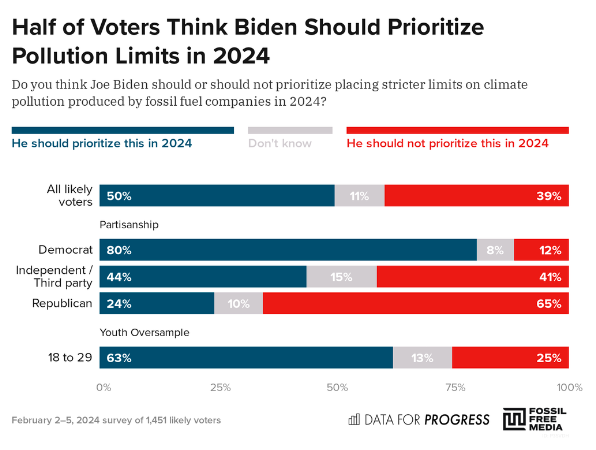
Voters distrust fossil fuel companies and the politicians that they fund, and want to see fossil fuel companies held accountable for their pollution. 84% of voters are concerned about oil and gas companies making large profits while consumers face rising energy bills. 78% of voters agree that “oil and gas companies that knew about the polluting impact of burning fossil fuels, but that intentionally misled the public about it, should be held accountable”.
Environmental Polling Roundup - March 15th, 2024
This post includes climate and environment headlines, data points, and key takeaways from recent public polls - including new polling about President Biden’s record on climate change and clean energy + new research on messaging about electric vehicles.
HEADLINES